

What Is Responsive Web Design? A 2026 Guide
October 30, 2013
How to Build a Strong Social Media Presence (2026)
January 20, 2014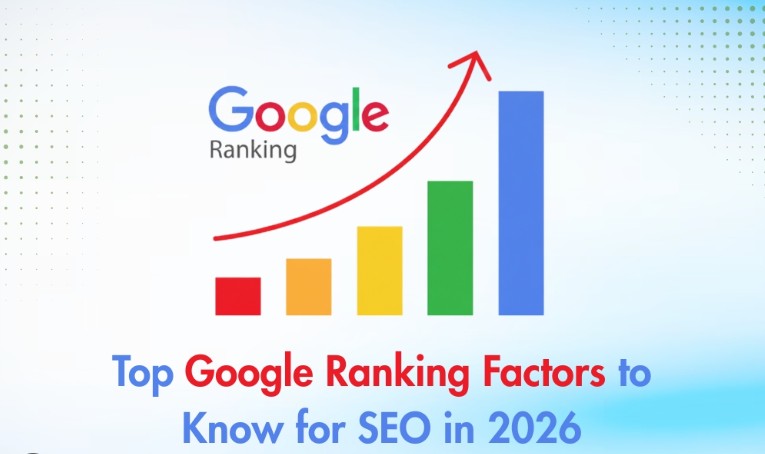
Google reportedly uses hundreds of signals to rank web pages, and you will never optimize for all of them. The good news: you don’t have to. Most “ranking factors” checklists are padded with myths and trivia, but the signals that actually move rankings in 2026 come down to a handful of things done well. And while backlinks still matter, modern ranking is about far more than links — so let’s look at what genuinely counts, and what you can safely ignore.
Relevance and search intent
The foundation of every ranking is relevance: does your page answer what the searcher actually wants? Google has gotten very good at understanding intent, so a page that truly matches the purpose behind a search will outrank a “more optimized” page that misses it. Before anything else, make sure your page delivers exactly what someone searching your target term is looking for.
Content quality and helpfulness
Google’s systems are built to reward content created to help people, not to game search engines. That means original, genuinely useful, reasonably thorough content that answers the question and gives the reader a reason to stay. Thin, generic, or copycat pages get filtered out. This is where strong SEO copywriting earns its keep — writing that’s both useful to humans and clearly on-topic.
E-E-A-T: experience, expertise, authoritativeness, trust
One of the biggest shifts in modern SEO is how much weight search engines put on trust. E-E-A-T stands for Experience, Expertise, Authoritativeness, and Trustworthiness — and it matters most for topics that affect someone’s money, health, or safety. In practice: show who created the content and why they’re credible, keep your information accurate, and run a professional, secure site. You can’t fake expertise with keywords.
Backlinks and authority
Links from other websites are still a major ranking factor — they act as votes of confidence. But this is the part people most misunderstand. A handful of links from relevant, trustworthy sites is worth far more than a pile of low-quality ones, and manipulative link building can now hurt you. Earn links by creating things worth referencing, not by chasing volume.
On-page signals
These are the elements you control directly on each page, and getting them right consistently separates sites that rank from sites that don’t:
- Title tags — clear, compelling, with your main topic near the front.
- Headings — one clear H1 (your post/page title) and logical H3s that organize the content.
- Internal links — link related pages together so search engines can discover and understand them.
- Natural keyword relevance — cover the topic thoroughly so the right terms appear naturally; there is no magic keyword-density number.
- Descriptive URLs and image alt text — small signals that add up.
Page experience and Core Web Vitals
How your page feels to use is a genuine ranking factor now. Google’s Core Web Vitals measure loading speed, responsiveness, and visual stability, and slow or clunky pages lose both rankings and visitors. The essentials: fast load times, a site that works well on mobile (Google evaluates the mobile version first), and HTTPS security. This is where SEO and web design overlap — a fast, well-built site ranks better and converts better.
Freshness — where it applies
For some searches, recency matters: news, trends, “best X for [current year],” anything that changes over time. For those topics, keeping content current is itself a ranking advantage. For evergreen topics it matters less — but updating and improving older content is one of the most reliable SEO wins there is.
What no longer moves the needle
Just as important as knowing what works is dropping the myths that waste your time:
- Keyword density / stuffing — repeating a keyword a set number of times does nothing (and stuffing hurts).
- The meta keywords tag — Google has ignored it for well over a decade.
- Exact-match domains — having your keyword in your domain name is not the edge it once was.
- Word count for its own sake — longer isn’t better; complete and useful is better.
- Low-quality, high-volume link building — it ranges from useless to actively harmful.
Ranking in the age of AI Overviews
Search results increasingly include AI-generated summaries that answer questions right on the page and cite their sources. That makes people wonder whether ranking still matters — it does, and the way to win is the same. Those AI answers are built from web content, and the pages they pull from and credit are the clearly written, well-structured, genuinely authoritative ones. Everything above still applies; if anything, clarity and trust matter more, because you’re now optimizing to be the source an AI relies on.
The bottom line
Forget the 200-item checklists. In 2026, ranking comes down to a few things done well: match search intent, publish genuinely helpful content, demonstrate real expertise and trust, earn quality links, nail the on-page basics, and deliver a fast, solid page experience. Do those consistently and the rankings follow.
If keeping up with all of that isn’t how you want to spend your time, that’s exactly what a senior specialist is for. Our SEO services focus on the factors that actually move the needle — no myths, no busywork. Reach out and we’ll tell you honestly where your site stands and what would move it.