
Outdated SEO Tactics to Abandon in 2026
January 25, 2015
A Guide to PPC Marketing For Beginners
December 26, 2021
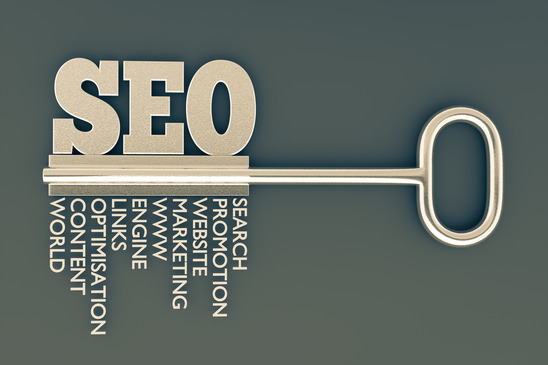
Search engine optimization — SEO — is the practice of helping search engines understand your website, and trust it enough, to show your pages to the people already searching for what you offer. That’s the whole game. When someone types a question into Google, SEO is the work that makes *your* page the answer they find.
Here’s the most important thing to understand up front, because it’s where most outdated advice goes wrong: SEO used to be about repeating a keyword on a page as many times as possible. That era is over. Modern search engines don’t count keywords and reward the page that used one the most — they try to understand what a searcher actually *wants* and serve the most genuinely helpful, trustworthy answer. Everything below follows from that shift.
There are technical and non-technical sides to SEO, and you don’t need to master the technical side to get started. Let’s walk through the fundamentals.
Start with search intent, not keywords
Before you write a single word, ask what the person searching actually wants. Someone typing “running shoes” wants to browse and buy. Someone typing “how to clean running shoes” wants instructions, not a product page. Someone typing “best running shoes for flat feet” wants a comparison. Same topic, three completely different intents — and Google ranks a different *kind* of page for each.
Getting intent right is the single biggest lever in modern SEO. Match what your page offers to what the searcher is really after, and you’re already ahead of most sites competing for the same terms.
Keywords still matter — just not the way they used to
Keywords are the words and phrases people type into search. You still need to know which ones your audience uses and make sure your page clearly covers them. What’s changed is *how*. There’s no magic number of repetitions, and cramming a phrase in over and over (“keyword stuffing”) now actively hurts you.
Instead, write naturally and thoroughly about the topic. When you genuinely cover a subject, the important words — and their synonyms and related concepts — show up on their own. Search engines are good at recognizing real, useful writing versus keyword spam. Natural, intent-focused writing is the core of effective SEO copywriting and it’s what wins now.
Get the on-page basics right!
On-page SEO is the set of elements you control directly on each page. These are the fundamentals to get right every time:
Title Tag: The clickable headline that appears in search results. Put your main topic near the front, keep it around 60 characters, and make it worth clicking.
Meta Description: The short summary under the title in search results. It doesn’t directly affect rankings, but a compelling one earns more clicks.
Headings (H1, H2s): One clear H1 for the page’s main topic, then H2s to organize sections. They help readers *and* search engines understand your structure.
URLs: Short, readable, and descriptive.
Internal Links: Link from one page on your site to another related one. This helps search engines discover your pages and understand how they relate. (It’s also why a strong blog post should link to your service pages.)
Image Alt Text: A plain description of each image, for accessibility and for search.
None of this is complicated, but doing it consistently on every page separates sites that rank from sites that don’t.
Earn attention, then keep it.
An attention-getting headline gets the click. What happens next matters just as much: if people land on your page and immediately bounce back to search, that’s a signal your page didn’t deliver.
Most people skim, so make your content easy to consume. Use short sentences and paragraphs, plenty of white space, clear sub-headers, and images to break up text. But formatting alone isn’t enough — the page has to actually *answer the question* the person came for, quickly and completely. A page that fully satisfies the searcher is the page that earns its ranking over time.
E-E-A-T: Why trust is now central.
One of the biggest shifts in modern SEO is how much weight search engines put on E-E-A-T — Experience, Expertise, Authoritativeness, and Trustworthiness. In plain terms: Google wants to surface content from people and businesses that genuinely know the subject and can be trusted, especially for topics that affect someone’s money, health, or safety.
What this means in practice: show who’s behind the content and why they’re credible. First-hand experience, a real author, an about page, accurate information, citations where relevant, and a professional, secure website all build trust. You can’t fake expertise with keywords — and in 2026, you’re not really trying to impress an algorithm, you’re trying to demonstrate you’re the real thing. (This is exactly why hiring a senior specialist to run your [SEO](/seo/) tends to outperform generic, mass-produced content.)
Links and authority
Search engines still treat links between sites as votes of confidence. When another reputable website links to your page — a **backlink** — it signals that your content is worth referencing. A handful of links from relevant, trustworthy sites is worth far more than a pile of low-quality ones, so quality beats quantity every time.
You can encourage this the old-fashioned, non-technical way: create something genuinely worth linking to and sharing, and make it easy for readers to pass along. Social shares don’t directly move rankings, but they put your content in front of more people — some of whom run websites and may link to it.
The technical foundation
You don’t need to be a developer, but a few technical basics have to be in place or nothing else matters:
Page Speed: Slow pages lose visitors and rankings. Core Web Vitals (Google’s page-experience metrics) reward fast, stable pages.
Mobile-Friendliness: Google evaluates the mobile version of your site first, so it has to work well on a phone.
Indexability: Search engines have to be able to crawl and index your pages (no accidental “noindex” tags or blocked pages).
HTTPS: A secure site is a baseline trust signal.
Get these right once and they quietly support everything else you do.
SEO in the age of AI Overviews
The newest shift: search engines increasingly answer questions right on the results page with AI-generated summaries (Google’s **AI Overviews** and similar features). Understandably, that makes people ask whether SEO still matters. It does — it’s just evolving.
Those AI answers are built *from* web content, and they cite sources. The pages that get pulled into and credited by AI summaries are the same ones that win at traditional SEO: clearly written, well-structured, genuinely authoritative content that directly answers real questions. So the fundamentals in this guide aren’t going away — if anything, clarity, expertise, and trust matter *more* now, because you’re optimizing to be the source an AI trusts, not just a blue link a human clicks.
Where to start
You don’t have to do everything at once. Start here:
1. Figure out what your audience is actually searching for, and the intent behind it.
2. Write genuinely helpful content that answers it — naturally, not stuffed with keywords.
3. Nail the on-page basics (title, description, headings, internal links).
4. Make sure the site is fast, mobile-friendly, and secure.
5. Build trust: show who you are and why you know your stuff.
That’s the foundation. SEO rewards patience and consistency more than tricks — it compounds over months, not days. If you’d rather have a senior specialist handle it for you, that’s exactly what our SEO services are for. Either way, you now know what SEO really entails in 2026 — and that’s more than most!