

A Guide to PPC Marketing For Beginners
December 26, 2021
Still Looking for “AdWords Management” in Boulder? Here’s What Changed While You Weren’t Looking
September 7, 2026
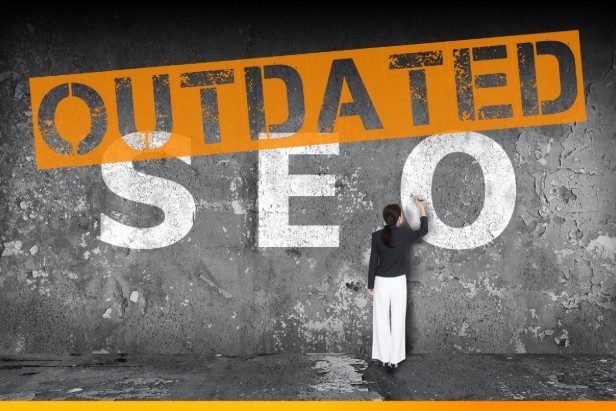
Ask ten business owners about SEO right now and half of them will tell you it’s dead — that AI has taken over search and there’s no point optimizing anymore. They’re half right and half wrong, and the difference matters a lot for your business. AI has genuinely changed how search works. But SEO isn’t dead; it’s evolving, and the businesses that understand how are going to pull ahead of the ones who panic or give up. Here’s an honest, jargon-free look at what’s actually happening and what to do about it.
What’s actually changed
For twenty years, search worked one way: you typed a query, Google showed a list of links, and you clicked one. AI has added a new layer on top of that. A few developments are driving the shift:
- AI Overviews. Google now shows AI-generated summaries at the very top of many search results, answering the question directly before you ever reach the links. They launched in 2024 and have expanded rapidly since.
- AI Mode and conversational search. Google and others now offer chat-style search where you ask follow-up questions and get synthesized answers rather than a page of links.
- Answer engines. A growing number of people skip traditional search entirely and ask ChatGPT, Perplexity, or Gemini directly. These tools pull from web content and cite sources, effectively becoming a new kind of search engine.
The common thread: more and more searches are being answered on the results page or in a chatbot, using content pulled from websites like yours.
What it means for your traffic
Here’s the honest part. When an AI answer fully satisfies a searcher, they may not click through to any website at all — so for purely informational queries, the raw number of clicks has dropped. That’s real, and pretending otherwise helps no one.
But there’s a flip side that changes the whole strategy: the sources an AI cites earn outsized attention. Studies of AI Overviews consistently find that while overall click-through rates fall, the brands and pages that get cited in those AI answers see a meaningful lift in clicks, trust, and branded searches. Being named as the source an AI trusts has become its own form of visibility — often a more valuable one, because it positions you as the authority.
So the game isn’t over. It’s shifted — from “rank in the list of links” to “be the source the AI answer is built from.”
The real shift: from ranking to being cited
This is the single most important idea to take away. Traditional SEO aimed to rank your page in the top handful of blue links. The new goal layered on top of that is to become the content that AI systems quote, summarize, and cite when they answer a question. Some people call this “generative engine optimization” or “answer engine optimization,” but you don’t need the buzzwords — you just need to understand that you’re now optimizing to be the trusted answer, not only the top link.
And here’s the reassuring reality: the work that gets you cited by AI is almost exactly the same work that has always won at SEO. Which brings us to what to actually do.
How to stay visible in AI search
None of this is exotic. If anything, AI has raised the reward for doing the fundamentals genuinely well.
- Answer questions directly and clearly. AI systems favor content that gives a clear, concise answer up front, then supports it with depth. Lead with the answer, then explain — the same structure that wins featured snippets.
- Publish genuinely helpful, original content. AI is trained to surface content made to help people, and to filter out thin, generic filler. Original insight, real examples, and first-hand experience are what get pulled into answers.
- Demonstrate real expertise and trust (E-E-A-T). Show who wrote the content and why they’re credible — real authors, an about page, accurate information. AI systems weight trustworthy sources heavily, especially for anything involving money, health, or important decisions.
- Structure your content well. Clear headings, logical sections, and clean, semantic HTML make it easy for both people and machines to understand and extract your content.
- Keep the technical foundation solid. Fast, mobile-friendly, crawlable pages with sensible schema markup. One caveat worth knowing: piling on schema does not buy you a citation — the quality of the content underneath it is what actually matters.
- Build a recognizable brand and get mentioned. AI systems notice which businesses are talked about across the web. Reviews, mentions, and links from reputable sites all reinforce that you’re a legitimate authority worth citing.
Notice what’s not on that list: keyword tricks, thin pages, or gaming the system. Those never had a future, and AI has closed the door on them for good. This is the heart of modern SEO copywriting — writing that’s genuinely useful to a human and clearly authoritative to a machine.
What not to do
Two traps to avoid in the AI era. First, don’t mass-produce AI-generated filler to “keep up.” Search engines actively penalize scaled, low-value content, and flooding your site with it is one of the fastest ways to lose trust. Use AI as a tool to work faster if you like, but the expertise, accuracy, and originality still have to be real. Second, don’t panic and abandon SEO. The businesses that stop investing are exactly the ones ceding ground to competitors who are showing up in AI answers.
The bottom line
AI hasn’t killed SEO — it’s raised the stakes on doing it authentically. The old shortcuts are gone, but the reward for genuinely useful, trustworthy, well-structured content is bigger than ever, because now that content doesn’t just rank, it gets cited as the answer. If you’ve built your site on real expertise and helpful content, you’re already positioned to win. If you haven’t, that’s the work to start now.
If keeping up with all of this — AI Overviews, structure, technical health, authority — isn’t how you want to spend your time, that’s exactly what a senior specialist is for. Our SEO services are built around what actually earns visibility in 2026, AI included. Reach out and we’ll tell you honestly where your site stands and what would move it.